Back from the UFAW Centenary Conference which was the last conference of UFAW and the first conference of SciFAW, the organisation’s new name. I have a few notes here and there and photos and was thinking this is a good opportunity to kick off my writing for this blog again. Let’s see if it works this time, or in other words if I can match ambition with consistent practice!
I realised as I was getting ready to leave for the conference that my first UFAW conference must have been the 75th anniversary, because it was in 2001, and was also in London. Twenty-five years is quite a considerable period in anybody’s lifespan, and for me as a professional, these specific 25 years has taken me from being a newly graduated PhD who only knew a handful of people at the conference to a senior scientist who has had the opportunity to participate in the process of rebranding the organisation as a Trustee for UFAW. The organisation has such a special place in my heart and will continue to have for a long time to come. The new name – Science for Animal Welfare – really captures what UFAW was and SciFAW is about what makes it unique. Let’s see how long it takes us to get used to it!
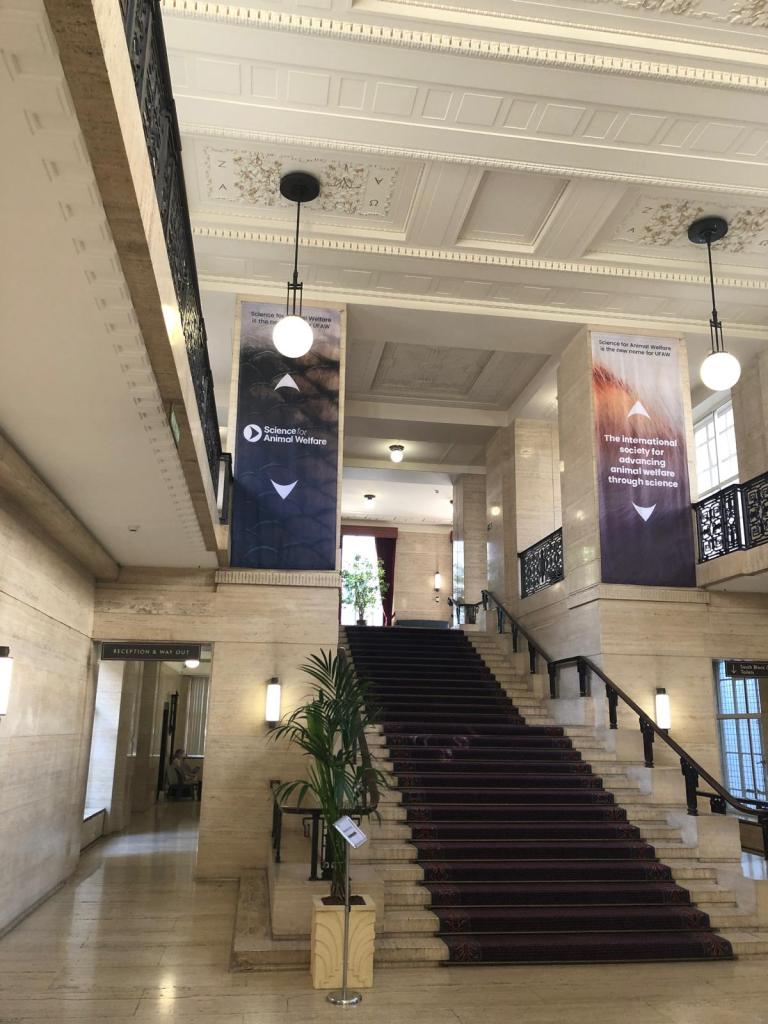
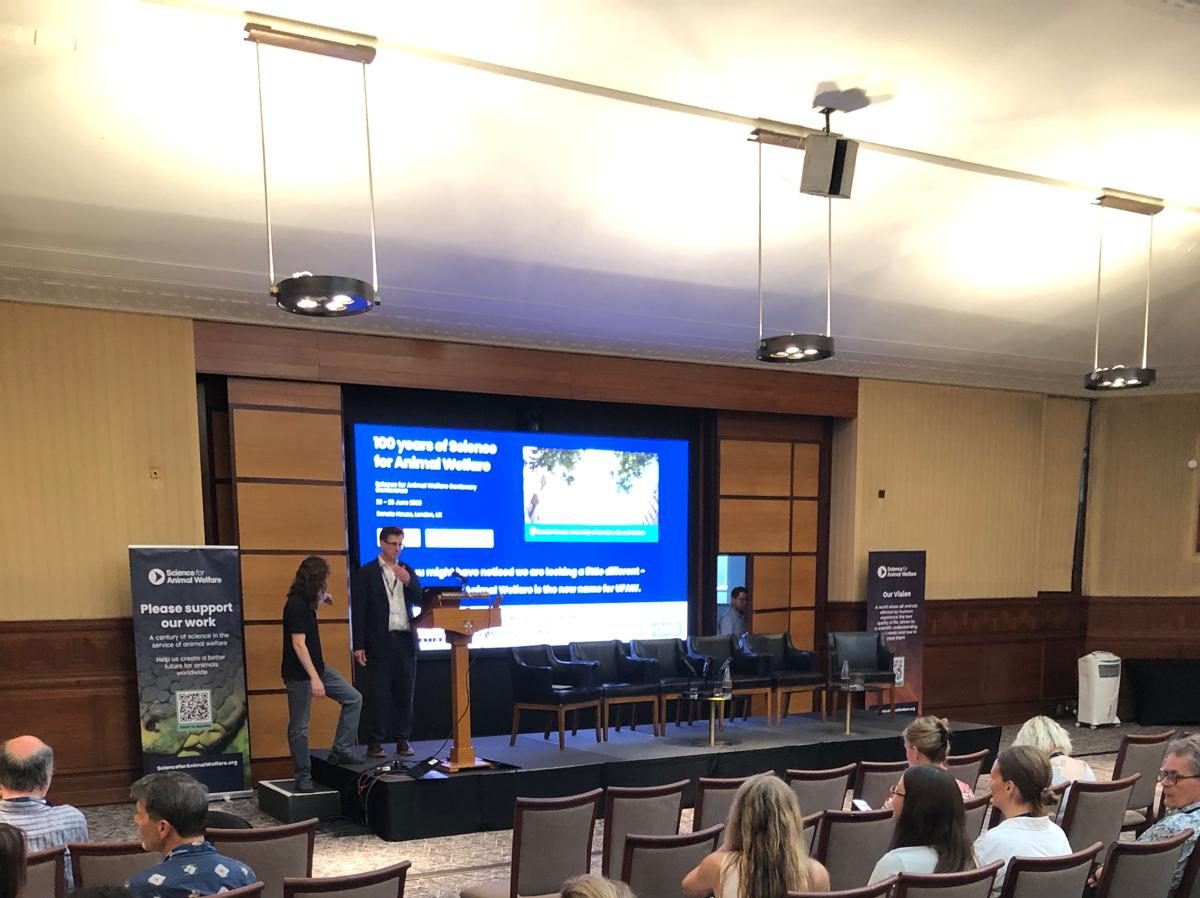
What makes the UFAW/SciFAW conferences so great is that they are scientific conferences about animal welfare. It’s science and it’s animal welfare and it’s not limited to any particular group of animal species or scientific approach. What also makes the conferences so great is the people who attend them. (OK, from the picture above it looks like nobody does, but this photo was taken 45 minutes before the first session of the day started and only the SciFAW staff, Cristine Nicol and myself had arrived!)
Of course it matters to me that this is my crowd, but I think also objectively speaking this is a crowd that is what we in Portuguese would call “boa onda”. It’s always a friendly and supportive context. And several of the notes I’m bringing have to do with that.
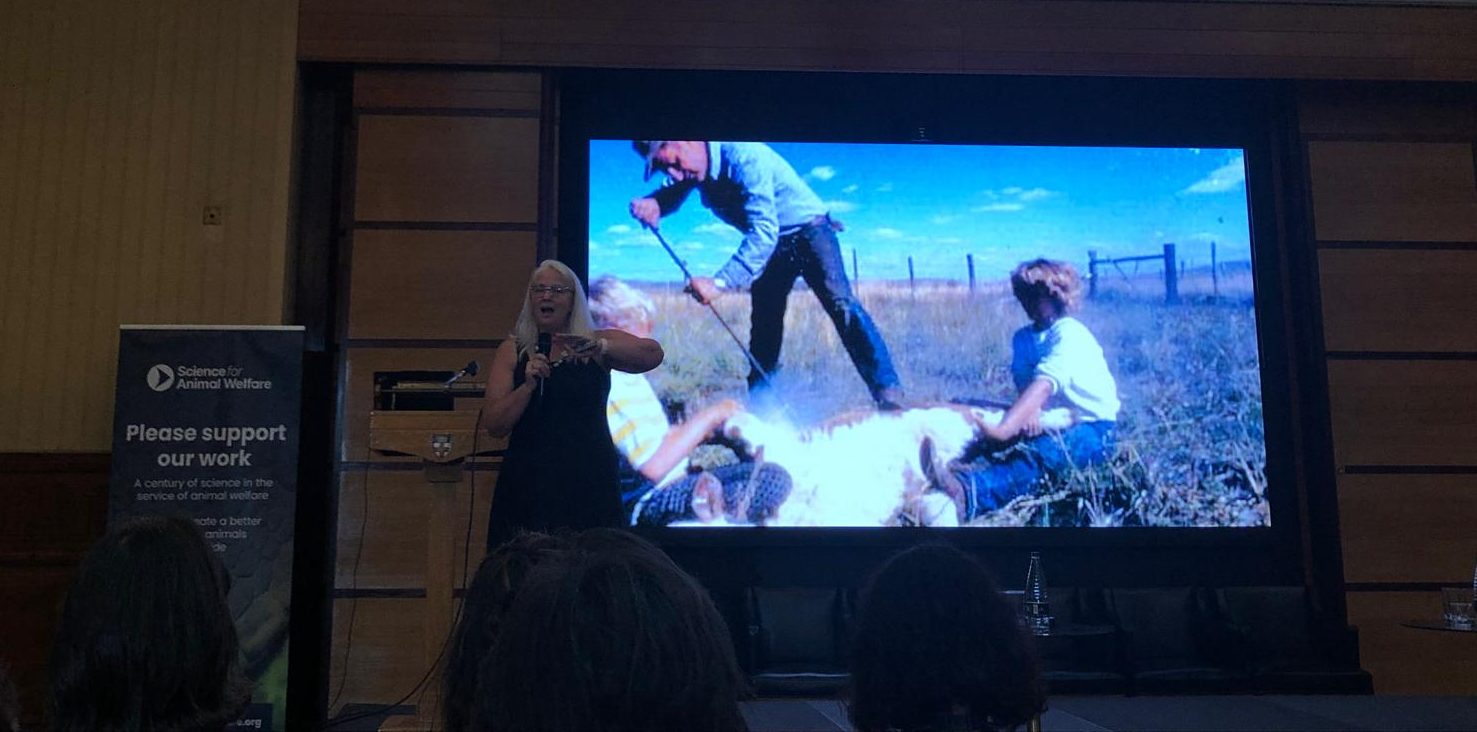
“This is an incredible space to work in – it’s not an easy space to work in” was among the first things Nina von Keyserlingk said in her wonderful Medal Lecture. Why? Incredible because of how important your work is (and it’s not everybody’s privilege, to be able say that about one’s work) and how fantastic the context it can be. I think that’s also why it’s difficult. Working for better animal welfare means working with the problems of poor animal welfare, which in itself is an emotional challenge. It also implies the frustrating experience of change being slow and resistance sometimes large. It’s difficult because working where you can make a difference means working with people who have a different view. Sometimes they are in themselves the source of the resistance, but more often it is rather that they are positioned somewhere else in the multifaceted complex reality where humans use and treat animals. If they are farmers as in the narrative of Nina’s lecture, they are the ones whose livelihood depends on these animals, who need to balance the needs of the animals with what society thinks and the market demands. Not everyone at the UFAW/SciFAW conferences work in the interface between science, animals and stakeholders but a lot of us do and I believe it’s something most of us think about.
I hope that SciFAW will make the lecture available online in a public channel because it really deserves being watched by many. Each of us who have the good fortune to make animal welfare our profession has their own journey, but watching other people’s journey is always inspiring and helpful if you are working on your own.
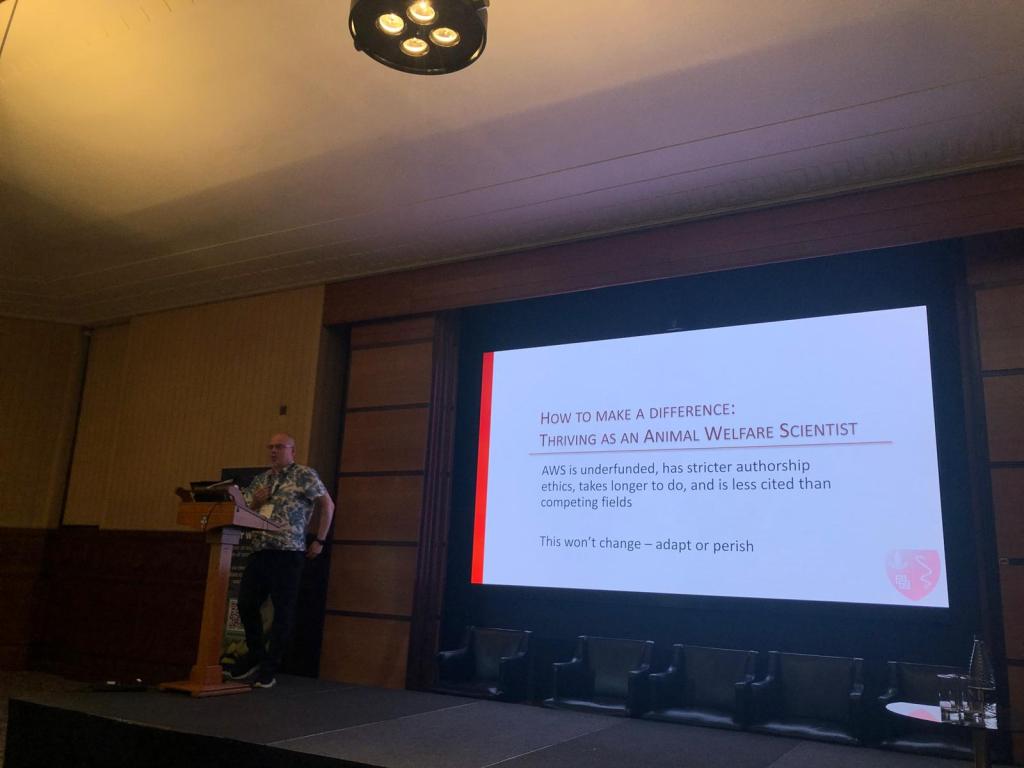
Joe Garner’s plenary lecture was fully designed as a series of reflections and recommendations for early career researchers in the field. It must have been a coincidence that he also started of with a very similar message. Whereas Nina is the scientist who once was a farm girl and whose research is in dialogue with farming practice, Joe’s perspective is that of an animal welfare scientist working in a highly competitive biomedical research context. Knowing that is important context for what’s in the slide. I can’t help thinking that on the one hand, I did clearly adapt because I haven’t perished, but on the other hand I spent a lot of time in my early career denying the facts. I may need to print the slide to remind myself every so often when I hear my colleagues speaking about just adding that additional experiment to make a more complete story…
I don’t aspire to make any kind of representative presentation of what were three days of great talks and discussions about animal welfare science, but of course there was a lot more. My post happens to be more about issues around and behind the science, which for some reason spoke more to me this time. Perhaps partly because it’s hard to focus on science when it’s 30+ degrees Celsius and one’s trying to compensate for lack of sleep by a continuous intake of iced coffee!